
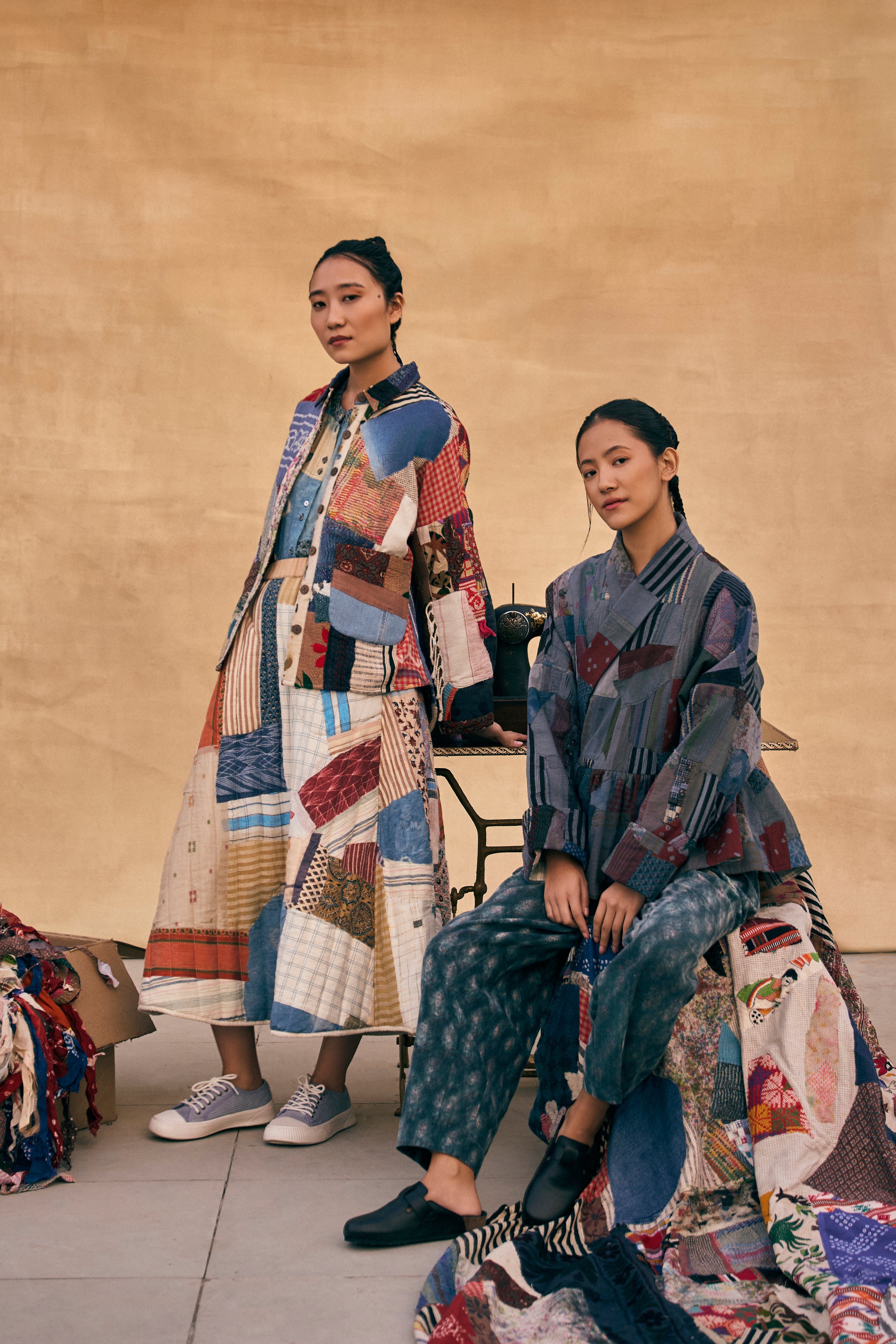
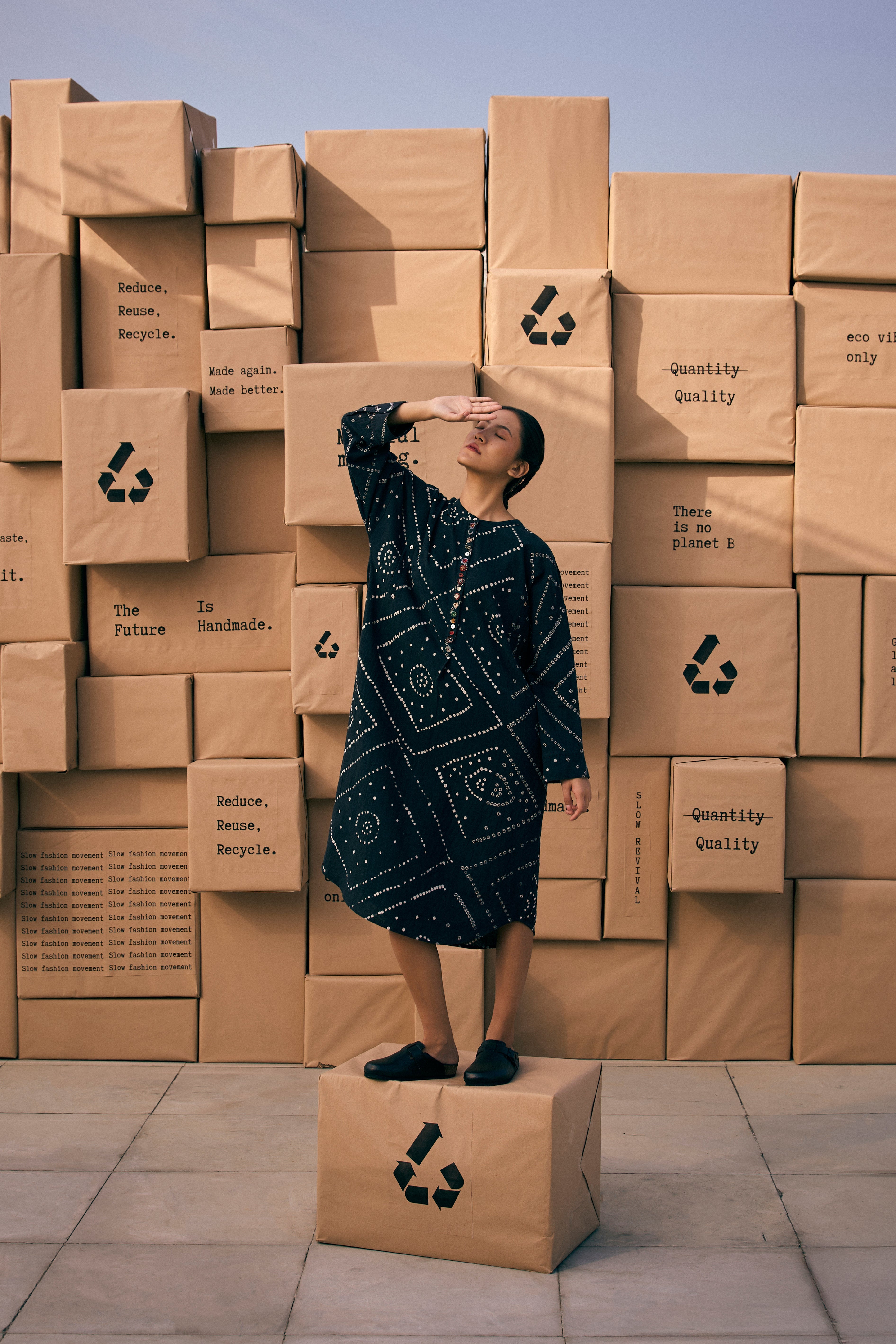
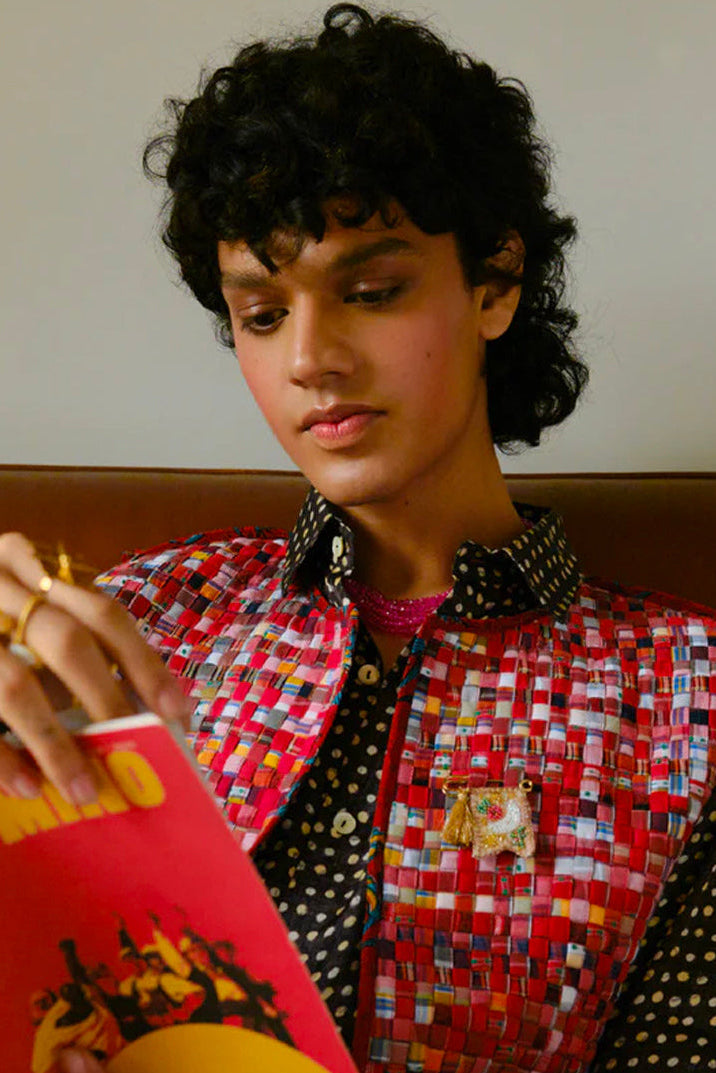
The collection started with a forgotten box in the studio filled with old samplepieces, cut panels, and abandoned ideas. Nothing matched. Nothing was planned. Whatlooked like clutter became the foundation. Sorting through these fragments forcedus to think differently, allowing what already existed to set the tone foreverything that followed.
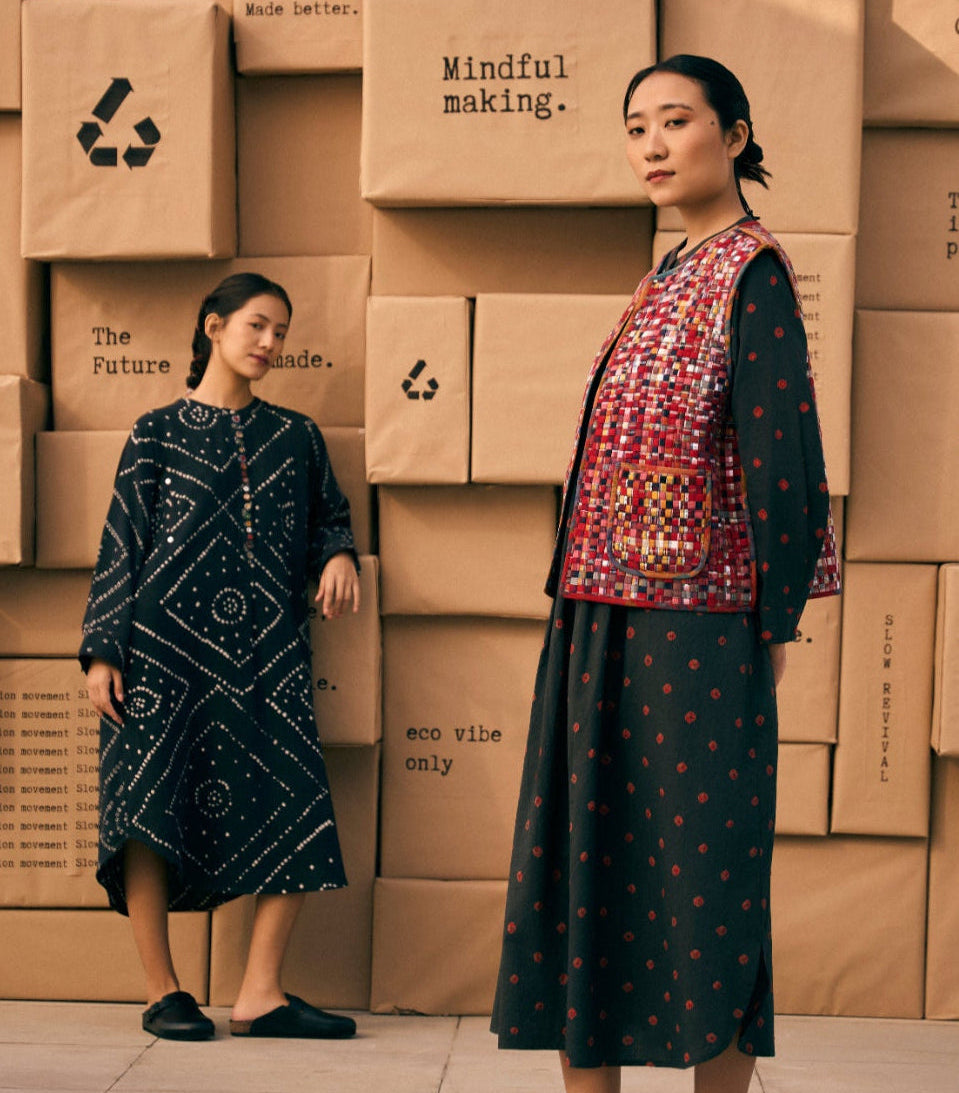
KAISŌ MONO
A Quiet Revolution Shaped by Time, Hands, and What Remains.
By MELD Studio
January 2025
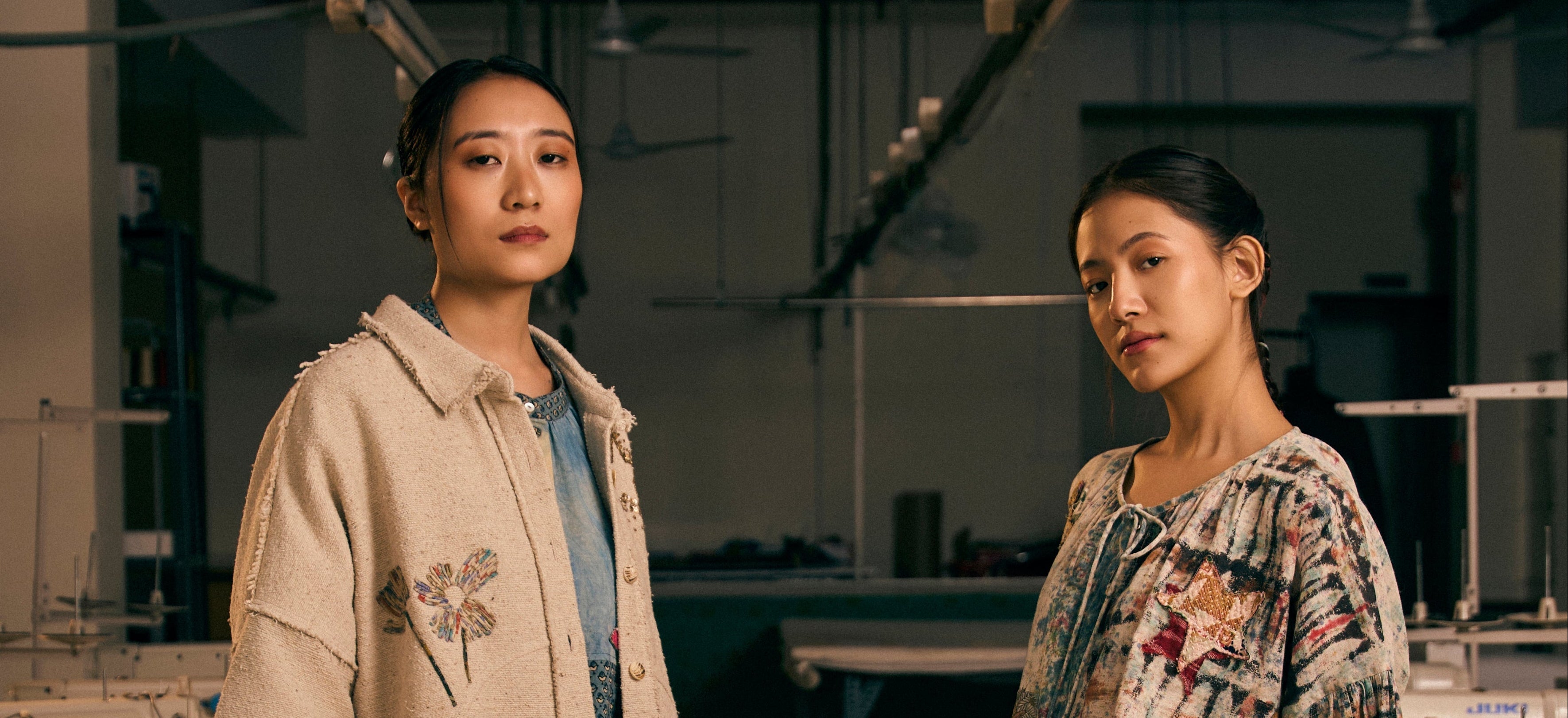
Kaisō Mono began with a simple question:
What do we do with what’s left behind?
Not as a trend or an aesthetic but as a reality inside every studio, factory, and craft space.
This collection didn’t start with moodboards or new fabric orders. It started with what already existed
forgotten studio boxes, paused factory floors, discarded denim, layered print tables, and scraps collected over
time. These spaces became our starting point. The material led the way. Instead of seeing leftovers as a problem,
we treated them as direction. Each place shaped the garments more than any sketch could. Some pieces arrived
frayed, some untouched. Some carried mistakes, others carried memory. None of them were predictable.
Kaisō Mono is not framed as “upcycled.” It’s framed as honest about where material really comes from, about the
industry’s habit of leaving things behind, and about how beauty can exist inside the unplanned. Built slowly,
piece by piece and hand by hand, the collection moves through five environments. Every garment carries traces
of these places, left visible and unpolished, as part of its identity.

THE FIND
Where everything begins


Between
Denimhas a way of holding stories more than any other fabric, so this phase felt different. When we hung thediscarded jeans across the studio, the space changed, suddenly the room was full of shapes and shadows, almostlike people standing still after a long day. Washing and reviving each piece felt like caring for somethingthat had been overlooked. The garments born here feel familiar, lived-in, and gently restored.


Table Leftovers
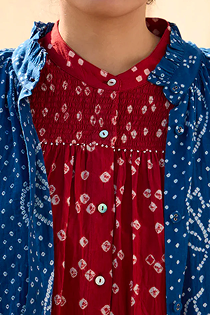
The fabric in this phase comes from the base cloth of the block-printing tables, material that quietly collects every colour, every imprint, every passing moment of the craft. With each new piece printed, another layer settles onto this cloth: stray dyes, half motifs, soft shadows of blocks that never became full patterns.When it becomes too stained, too layered, it is simply replaced and thrown aside.
We saw something different. In these accidental archives of colour, we found a story worth saving.These garments are cut from that overlooked cloth, bearing traces of many prints, many hands, and the quiet poetry of work that happens behind the scenes.


THE SCRAPS
The final phase returns to where everything begins. Kataran is laid out, scraps overlapping, pieces uneven. The tailor decides how it will come together,every decision, every movement, entirely his. When the chadar is complete, itbecomes a garment. What began as leftover fabric transforms into a piece shapedby hand, intuition, and chance, a final work that holds the story of thecollection in its threads.


